



Saint Patrick’s Day is celebrated every year on March 17, but behind the parades, green clothing, shamrocks, and festive atmosphere is a holiday with a much deeper history. It began as a religious feast day honoring Saint Patrick, the patron saint of Ireland, and slowly evolved into a global celebration of Irish culture, identity, and heritage.
Today, Saint Patrick’s Day is marked in Ireland, the United States, Canada, Australia, the United Kingdom, and many other countries. Famous landmarks turn green, cities host parades, and millions of people celebrate Irish music, dance, food, and tradition. But to truly understand the holiday, it is important to separate history from legend.
Who Was Saint Patrick?
Saint Patrick was a Christian missionary active in Ireland during the fifth century. Although he became the most famous patron saint of Ireland, he was not actually born Irish. Most historical sources place his birth in Roman Britain.
One of the most valuable sources about Patrick’s life is his own writing, known as the Confessio. In it, Patrick describes himself as the son of Calpornius, a deacon. He writes that he was captured as a teenager and taken to Ireland, where he was enslaved for several years. During this period, his religious faith became central to his life.
After escaping captivity, Patrick eventually returned to Ireland as a missionary. His mission was to spread Christianity, but his story is not just about religion. It is also a story of displacement, survival, identity, and transformation. That may be one reason why he became such a powerful symbol for the Irish people and, later, for Irish communities living abroad.
Why March 17?
Saint Patrick’s Day is celebrated on March 17 because that date is traditionally believed to mark Patrick’s death. The exact details of his life and death are debated by historians, but March 17 became associated with his feast day in the Christian calendar.
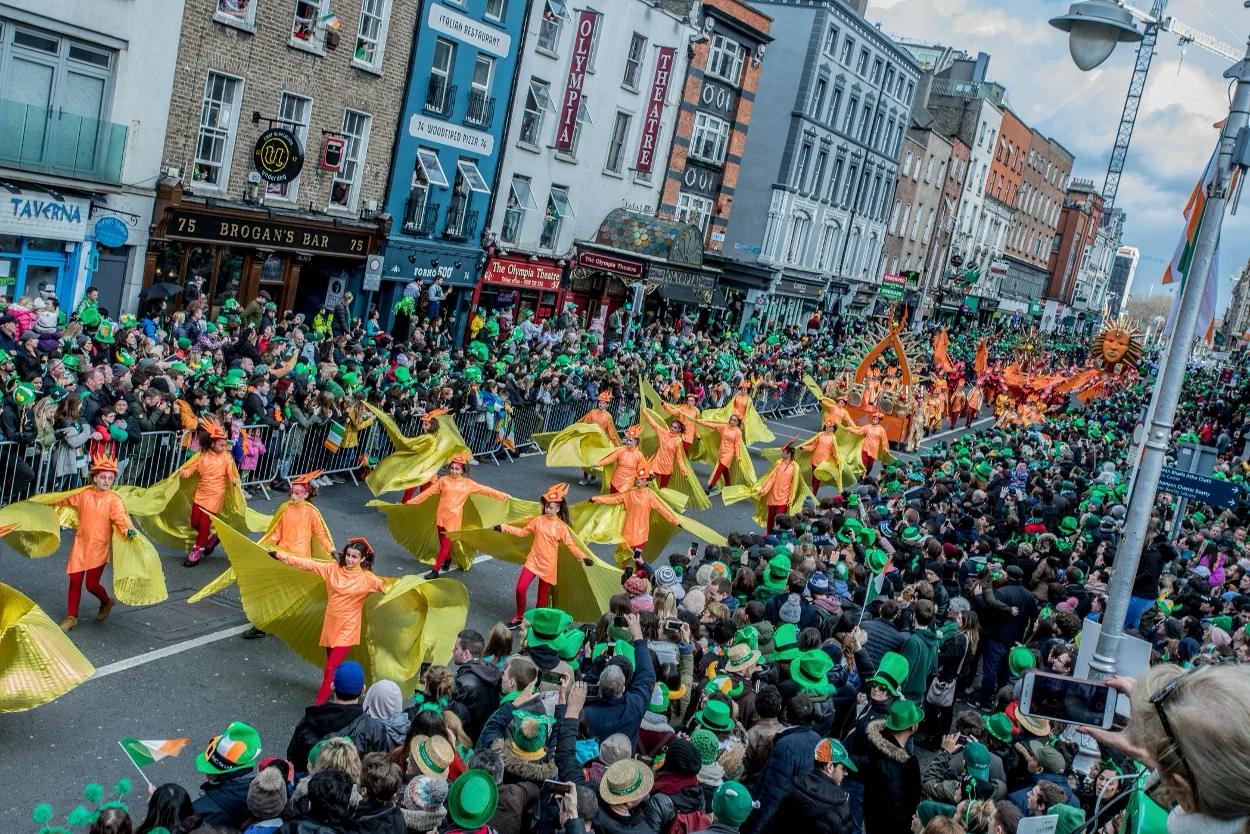
For centuries, the day was primarily religious. People attended church services and honored Saint Patrick’s missionary work. Because the date often falls during Lent, the feast day also offered a temporary break from strict Lenten restrictions. Over time, that religious observance gradually expanded into a broader cultural celebration.
From Religious Feast to National Celebration
In Ireland, Saint Patrick’s Day was originally centered on faith, community gatherings, and local customs. It was not always the massive public festival that many people imagine today. In fact, the large parade culture now associated with the holiday developed strongly among Irish emigrant communities, especially in North America.
The holiday became especially important for Irish immigrants. Public celebrations allowed them to express pride in their heritage at a time when many Irish communities faced poverty, discrimination, and pressure to assimilate. March 17 became more than a feast day; it became a declaration of identity.
In Ireland itself, Saint Patrick’s Day officially became a bank holiday in 1903. This marked an important step in the public recognition of the day as a national occasion. Modern Ireland now celebrates the holiday with parades, concerts, festivals, cultural events, Irish language activities, and tourism campaigns that present Irish culture to the world.
The Shamrock: Symbol, Tradition, and Myth
The shamrock is one of the most recognizable symbols of Saint Patrick’s Day. A popular tradition says that Saint Patrick used the three-leaf shamrock to explain the Christian doctrine of the Holy Trinity: Father, Son, and Holy Spirit.
However, historians are careful with this story. The National Museum of Ireland notes that the tradition linking Patrick directly to the shamrock is relatively late. That does not mean the shamrock is unimportant. Quite the opposite: it became a powerful symbol of Irish identity, religion, and national pride.
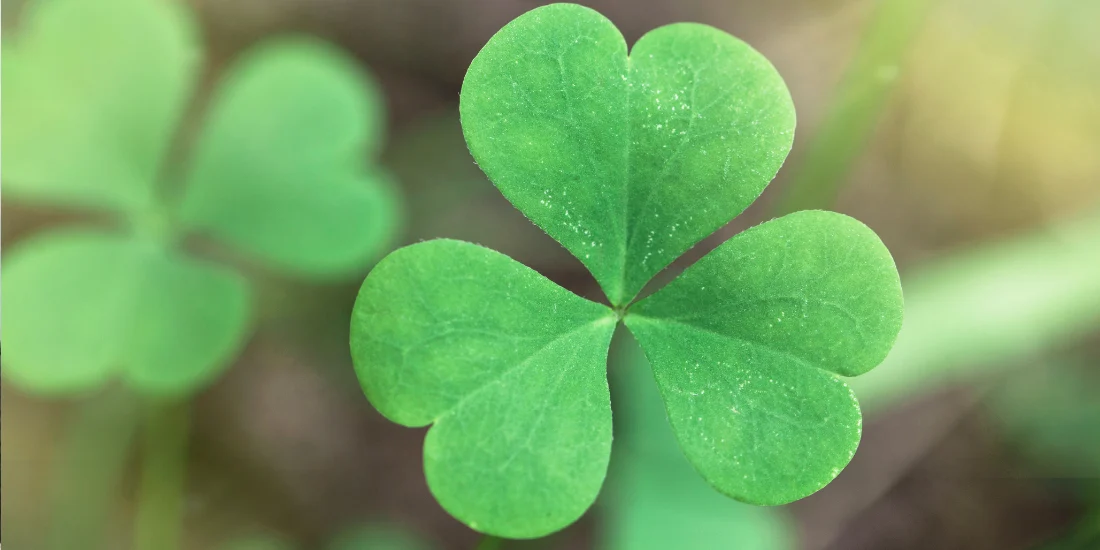
The shamrock’s strength lies in its simplicity. It connects nature, faith, folklore, and national symbolism in one tiny green plant. Not bad for something people usually step on without apologizing.
Why Do People Wear Green?
Green is now the dominant color of Saint Patrick’s Day, but this association developed over time. Green became connected to Ireland through the island’s landscape, the shamrock, and later Irish national identity. Ireland is often called the “Emerald Isle” because of its green countryside, so the color naturally became part of the holiday’s visual language.
Wearing green today is both festive and symbolic. It represents Irishness, celebration, luck, and belonging. For many people, even those without Irish ancestry, wearing green is a way to participate in the joy of the day.
Did Saint Patrick Really Drive Snakes Out of Ireland?
One of the most famous legends says that Saint Patrick drove all the snakes out of Ireland. It is a memorable image, but it is not historical fact. Natural history evidence suggests that snakes were not present in post-glacial Ireland in the first place.
The “snakes” story is better understood as legend or symbolism. Some interpretations see the snakes as representing evil or pagan beliefs, though that reading should also be handled carefully. What is clear is that the story belongs more to folklore than to documented biography.
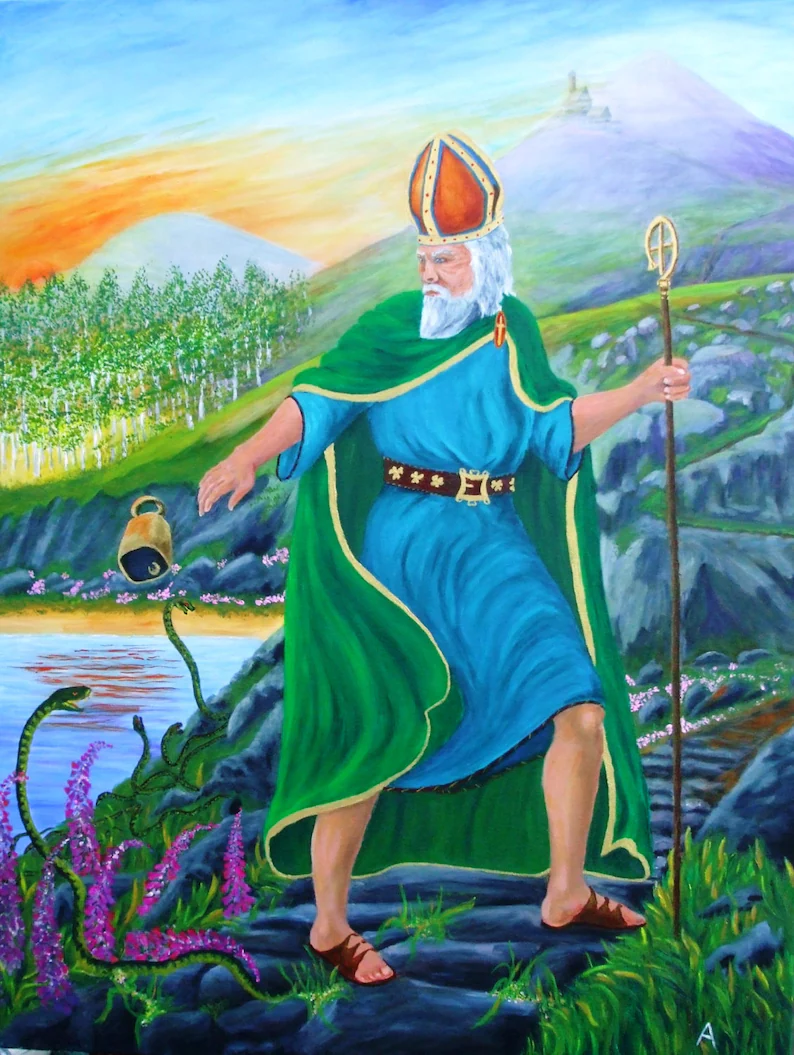
Still, myths often reveal what people value. The snake legend helped present Patrick as a heroic figure who purified and transformed Ireland. Historically accurate? Not exactly. Culturally powerful? Absolutely.
Parades and the Irish Diaspora
Many people are surprised to learn that Saint Patrick’s Day parades became especially prominent outside Ireland. Irish communities abroad used public celebrations to maintain a connection to home and to show pride in their identity.
In the United States, Saint Patrick’s Day became closely tied to Irish-American history. Parades in cities such as New York and Boston became major public events. They were not only celebrations but also statements of visibility. For Irish immigrants and their descendants, marching in the streets meant claiming space, dignity, and belonging.
This is one reason the modern holiday feels so global. It is not only about Ireland as a place; it is also about Irishness as a worldwide cultural identity.
Food, Drink, and Celebration
Food and drink are a big part of modern Saint Patrick’s Day, but traditions vary. In Ireland, traditional dishes may include Irish stew, soda bread, bacon and cabbage, colcannon, or other regional foods. In the United States, corned beef and cabbage became strongly associated with Irish-American celebrations.
The holiday is also famous for pubs, beer, whiskey, and social gatherings. However, reducing Saint Patrick’s Day to drinking misses the bigger picture. At its best, the day celebrates music, storytelling, family, history, migration, faith, humor, and resilience.
Saint Patrick’s Day Today
Modern Saint Patrick’s Day is both Irish and international. Ireland uses the holiday to celebrate its culture, promote tourism, connect with the global Irish diaspora, and share Irish creativity with the world. Around the globe, landmarks are lit in green, parades fill city streets, and people celebrate Irish culture through music, dance, language, and food.
The holiday’s meaning has expanded far beyond its religious origins. For some, it remains a sacred feast day. For others, it is a cultural celebration. For many Irish communities abroad, it is a day of memory and belonging.
Conclusion
Saint Patrick’s Day is more than green outfits, shamrocks, and parades. Its roots reach back to a fifth-century missionary whose life became a blend of history and legend. Over time, the holiday transformed from a religious feast into one of the world’s most recognizable cultural celebrations.
What makes Saint Patrick’s Day so enduring is its ability to carry many meanings at once. It honors a saint, celebrates a nation, connects a diaspora, and invites the world to share in Irish culture. Behind all the green is a story of faith, migration, identity, and pride — and that is what gives the holiday its lasting power.
References Consulted
- Saint Patrick’s Confessio
- Encyclopaedia Britannica
- Library of Congress
- National Museum of Ireland
- Ireland.ie
- Bank Holiday (Ireland) Act 1903